Love Lies Bleeding's readers know that main character Mara is both a vampire and a botanist. Trained when she was still human, she continues to study plants and have a garden. This post is sixteenth in a series exploring Mara's plants. Are you interested in botany, gardening, or plant lore? So are some vampires…
Please note: Medicinal uses are given for informational purposes only. Always consult a medical professional before diagnosing or treating yourself or anyone else.
Botanical Name: Dracaena cinnabarri
Common Names: Dragon blood tree, Socotra dragon tree, Dragon tree, ribbon plant, Dam al-Akhawain, cinnabar (not to be confused with the toxic mineral of the same name),
History: The national tree of Yemen, it's native to the Socotra archipelago. It earned its name because it "bleeds" dark red sap when cut. This resin was once thought to be actual dragon's blood and was used in magic and alchemy. It was also used medicinally by the Greeks, Romans, and Arabs, for everything from healing wounds, treating diarrhea, lowering fevers, and treating ulcers. Due to increasing development and other human activities in its habitat, as well as climate change, dragon blood tree is listed as a Vulnerable species. Fortunately the entire area, and the tree specifically, are the focus of conservation efforts.
Victorian Language of Flowers Meaning: Inner power
Cultivation: (Seeds and plants available to gardeners are usually Dracaena draco, but are very similar to D. cinnabarri.) Zones 9 to 12. Can be grown outdoors or as a houseplant (note: it is toxic to pets, especially cats). Full sun to part shade (indoor plants need 10 hours of bright but indirect light). Prefers well-drained, slightly acidic soil (a cactus or succulent soil will work well). Saplings needs to be nurtured with regular watering and protection from hungry animals. Don't let the plants sit in water because they're prone to root rot (but don't let them get too dry, either). Indoor plants benefit from having a humidifier nearby, especially in winter. Use slow release fertilizer every six months. The trees are very slow growing--only about 2.65 cm (1 inch) every five years, taking decades to mature. Once it matures it will flower and begin taking its umbrella shape. A dragon tree grown outdoors will grow to 4.5 to 15 metres (15 to 50 feet). Indoor trees tend to stay around a metre (3 to 4 feet) tall. Can be propagated by cuttings or seeds.
Uses:
Medicinal: The resin has antimicrobial properties and has been used medicinally since ancient times. It's used as a stimulant and breath freshener. The residents of Socotra use it as a heal all. The root produces a "gum-resin" that is used as a stimulant and for rheumatism. The root resin is also used as a mouthwash. The leaves are used to prevent/treat gas.
Caution: While Dragon's Blood is generally regarded as safe, there isn't enough data to be completely sure. Do not give to children or pets. Anyone pregnant or breastfeeding should consult their doctor before using Dragon's Blood (generally good advice for everyone).
Crafts: The resin has been used a varnish for violins since the 18th century. It's also used as a pottery glue and glaze and in photoengraving. Historically it was used as a paint pigment, but it was eventually discontinued for that purpose. The flames over the Apostles' heads in "Pentecost" by Giotto di Bondone are thought to have been painted with dragon's blood.
Dye: The resin is used to dye wool and colour cosmetics.
Incense and perfumes: The resin has a spicy vanilla-like scent that's said to have a calming effect.
Wildlife: The dragon blood tree produces berries that are eaten by birds and some other animals (who then disperse the seeds). Like the tree itself, the berries produce red resin.
Environmental: The dragon's blood tree helps support dozens of other plant and animal species, from geckos and snakes to flowering plants, making it what's known as an "Umbrella Species." One of the biggest benefits of the tree to the local environment is its ability to pull moisture from the air and direct it down into the soil.
Mara's Uses: The resin would be a key ingredient in her experimental plant-based blood substitute.
Further Reading:
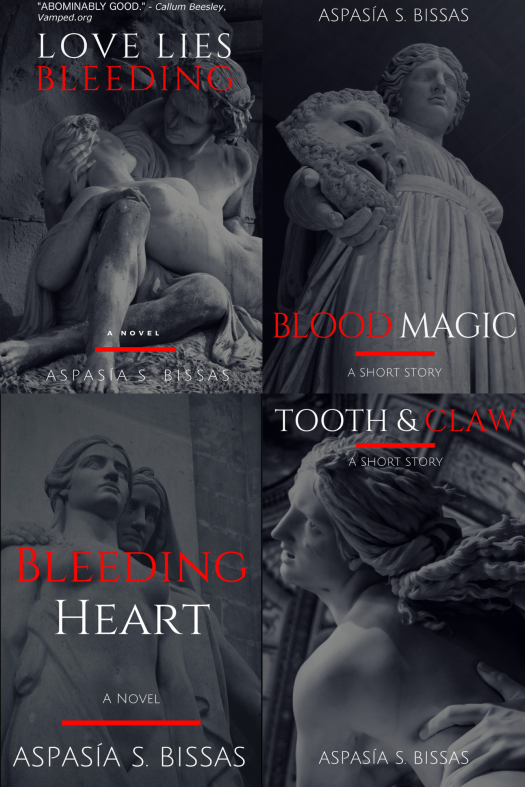
Love Lies Bleeding: Amazon │ Apple Books │ Barnes and Noble | Kobo | Smashwords
Bleeding Heart: Amazon | Smashwords | Apple Books | Barnes & Noble | Kobo
Tooth & Claw: Smashwords │ Apple Books │ Barnes & Noble │Kobo
Blood Magic: Smashwords │ Apple Books │ Barnes & Noble │ Kobo
If you prefer paperback, use this link to order Love Lies Bleeding from Bookshop – a portion of each sale goes directly to independent bookstores, as well as to myself. Thank you for supporting indie! ♥
Saving the dragon's blood
How to Grow Dragon Tree Indoors
Blood is life--the amazing Dragon's Blood Tree
What Is Dragon's Blood and What Are Its Uses?
UNESCO
Language of Flowers
Wikipedia
Cheers,
Aspasía S. Bissas







No comments:
Post a Comment